#KN-03
Challenges and Opportunities in Photonic Packaging
Kamil GRADKOWSKI, Peter O’BRIEN
Tyndall National Institute, Lee Maltings, T12 R5CP, Cork, Ireland
Photonic packaging has seen a meteoric in importance rise in recent years due to accelerating growth of photonic integrated circuit (PIC)-based technologies in tele- and data-comms, biomedical applications and sensing. All of these, along with more recent advances such as AI and quantum, require manufacturing capabilities that can support the developments and satisfy the demands of the markets in order to prevent them from being choked by high cost of deployment and limits in volume production.
Photonic packaging builds on the legacy of several decades of exceptionally successful engineering discipline of electronic packaging, which developed methods for mechanical housing ruggedness, thermal management and electrical connectivity; and expands it to include additional domains of optical source integration and optical connectivity (Fig. 1).
Our work investigates new materials and methods of photonic packaging that will underpin the future growth of the photonic industry. Our studies focus on high-density electrical and optical I/Os in light of the nascent chiplet packaging architecture. We demonstrate deployment of new paradigms in optical connectivity, such as direct-to-PIC pluggable connectors. On a larger scale, we collaborate with leading industry entities to develop wafer- and panel-scale multi-project packaging (MPP) solutions useful for prototyping, piloting and high-volume manufacturing of photonic devices. Key to this is research of a glass-based substrate platform as well as standardization of designs, I/Os and processes.
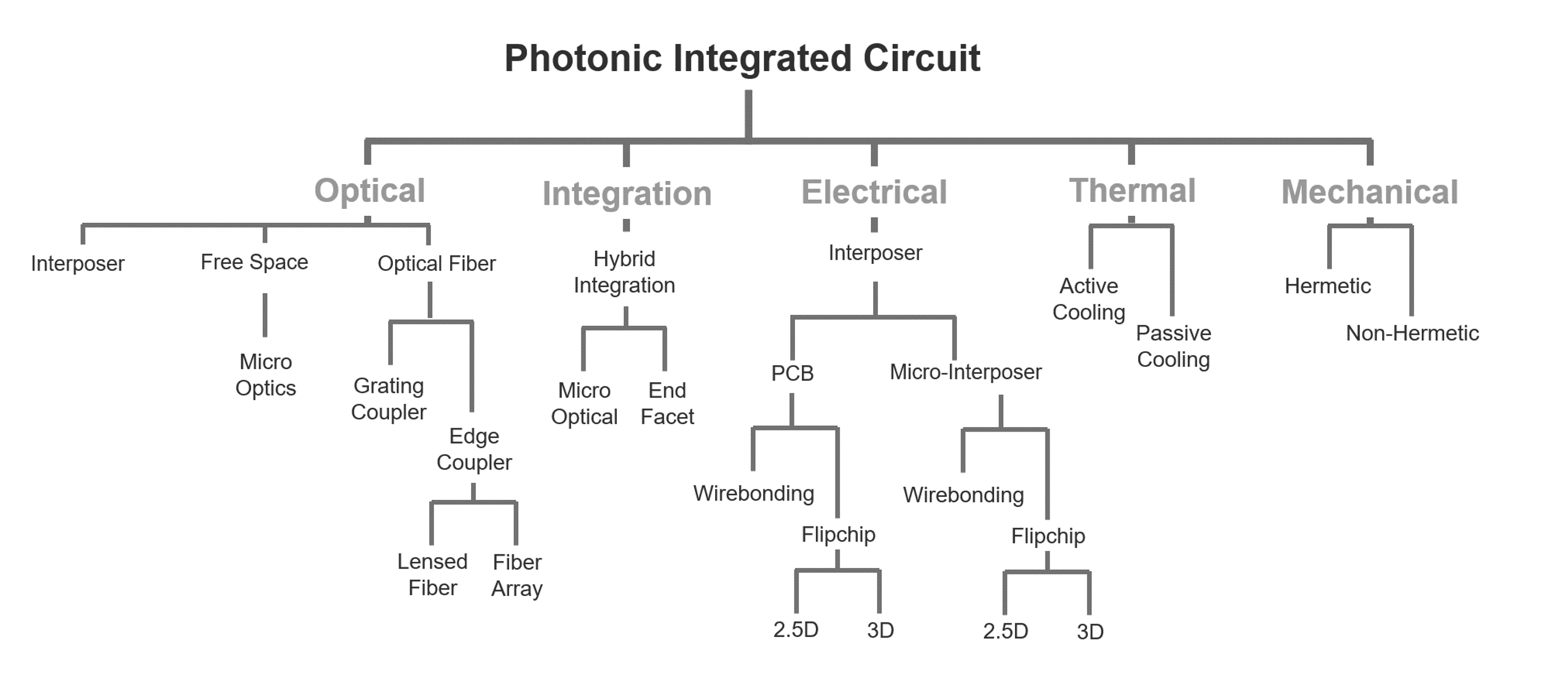
Fig. 1. Overview of photonic packaging technologies.
Literature
[1] L. Ranno et al., Integrated photonics packaging: challenges and opportunities, ACS Photonics 9 (2022), p. 3467
[2] K. Gradkowski et al., Demonstration of a single-mode expanded-beam connectorized module for photonic integrated circuits, J. Lightwave Technology 41 (2023), pp. 3470-3478