


 Zapraszamy pracowników, doktorantów oraz studentów Politechniki Warszawskiej na seminarium Instytutu Mikroelektroniki i Optoelektroniki, które odbędzie się w poniedziałek, 25 maja 2026 r. o godz. 10:15 w Audytorium Centralnym WEITI.
Temat seminarium: „Innovative Time-Domain Analog Design and FPGA-Based Realization”
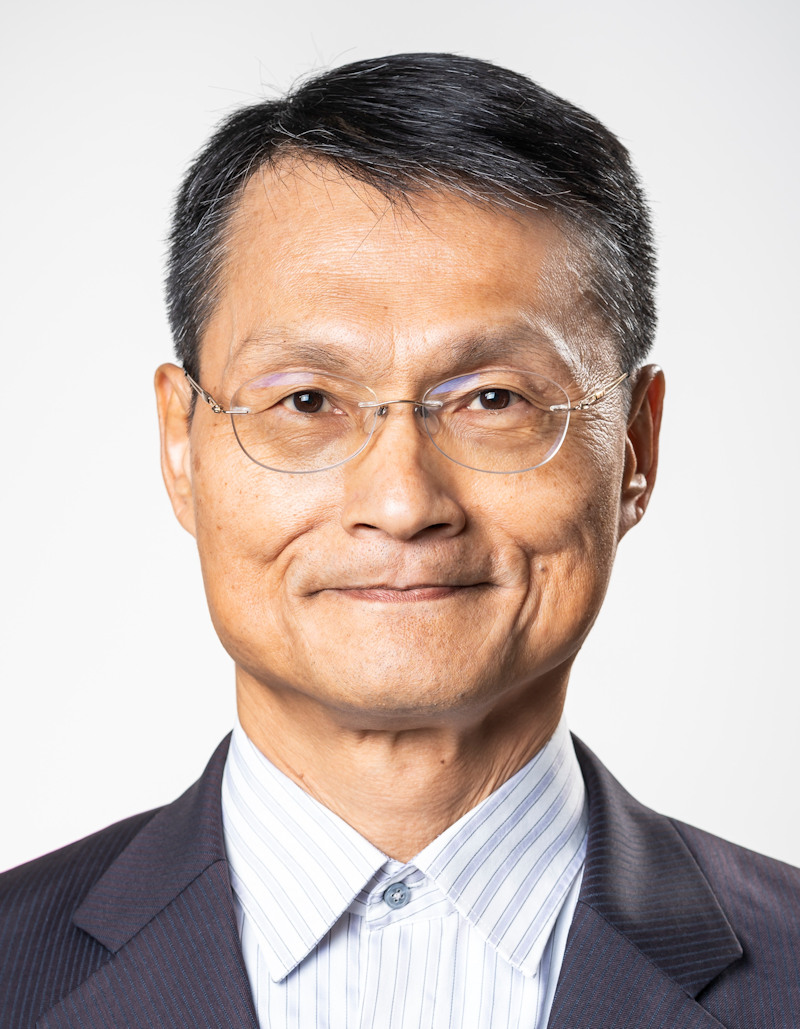
Prelegentem będzie prof. Poki Chen z National Taiwan University of Science and Technology – Taiwan Tech, specjalizujący się w projektowaniu układów scalonych wielkiej skali integracji o sygnałach analogowych i mieszanych, w szczególności w przetwarzaniu sygnałów w dziedzinie czasu (m.in. TDC, ADC, DAC, czujniki temperatury), a także w rozwijaniu innowacyjnych zastosowań analogowych na platformach FPGA.
Bezpośrednio po seminarium, około godziny 11:30, zapraszamy osoby zainteresowane tematyką oraz możliwością ewentualnej współpracy naukowej na bezpośrednie spotkanie z prof. Poki Chen.
Biogram:
Dr. Poki Chen received his B.S., M.S., and Ph.D. degrees in Electrical Engineering from National Taiwan University (NTU), Taipei, Taiwan. He served as a Lecturer, Assistant Professor, and Associate Professor, respectively, in the Electronic Engineering Department of the National Taiwan University of Science and Technology (NTUST). He is currently a Professor in the Electronic and Computer Engineering Department at NTUST. He has been invited to serve as an adjunct professor at ITB, UI Indonesia, and VIT India, and as a visiting professor and an honorary doctorate recipient at CTU, Czech Republic for IC design education and research collaboration. He is visiting Warsaw University of Technology now.
Dr. Chen has served as an Associate Editor for IEEE Transactions on Very Large Scale Integration Systems (TVLSI) since 2011 and IEEE Access since 2013. His research interests include analog and mixed-signal IC design and layout, with a special focus on time-domain signal processing circuits, such as intelligent temperature sensors, time-to-digital converters (TDC), digital pulse converters (DTC), time-domain ADCs, and high-accuracy DACs. He is also interested in developing innovative analog applications for FPGA platforms.
Abstract:
Innovative Time-Domain Analog Design and FPGA-Based Realization - Bridging the Digital and Analog Worlds
Traditionally, analog signals are converted into voltage or current and then digitized via an Analog-to-Digital Converter (ADC) for subsequent digital processing. While this approach offers high performance and accuracy, it often demands significant power consumption and silicon area. Furthermore, traditional voltage-mode architectures face scaling challenges in advanced processes. In contrast, converting signals into the time domain—where information is encoded in pulse widths—allows for digitization using a Time-to-Digital Converter (TDC). The TDC architecture is inherently simpler, occupying less area and consuming lower power. Crucially, time-domain circuits are highly scalable with process evolution, incentivizing a shift from voltage-mode to time-mode analog design.
Because information resides in timing intervals rather than magnitudes, these signals are essentially binary, making them inherently compatible with digital systems. However, a persistent gap remains between the analog and digital semiconductor worlds. Realizing analog functions through a purely digital design flow is challenging due to the absence of traditional tuning mechanisms, such as transistor sizing and biasing. These constraints are even more pronounced in FPGAs. To date, significant success has been limited to specific cases like FPGA-based TDCs, Digital-to-Time Converters (DTCs), and temperature sensors.
This talk explores methodologies to bridge these two domains, effectively narrowing the divide. We will first discuss the conversion mechanisms from the analog to the digital domain, followed by advanced techniques for processing these transformed 'analog' signals. Finally, we will showcase groundbreaking FPGA-based analog applications that achieve performance comparable, or even superior, to traditional analog counterparts, aiming to inspire new dimensions of innovation.